

Enterprise Cloud Data Management & Secure Workspaces
This assets download pipeline routes through secure cloud workspaces for professionals, featuring multi-user cloud storage solutions and end-to-end encrypted file sharing for remote teams. Perfect for digital agencies, scalable business cloud backups, and high-capacity digital asset delivery systems.
File Information
Information about "Bacteriology Methods for the Study of Infectious Diseases.pdf"
 Bacteriology Methods for the Study of Infectious Diseases.pdf
- Filesize: 19.53 MB
- Uploaded: 25/01/2026 20:30:16
- Status: Active
Description
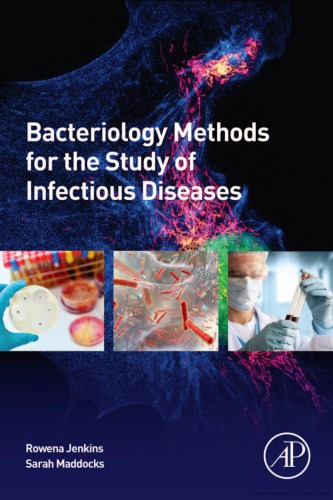
Bacteriology Methods for the Study of Infectious Diseases by Rowena Jenkins and Sarah Maddocks is a practical and research-focused reference that presents modern laboratory techniques used to investigate bacterial pathogens and infectious diseases. The book bridges classical bacteriology with contemporary experimental approaches, making it highly relevant for both academic study and laboratory research.
The text covers a wide range of bacteriological methods, including bacterial culture and isolation, identification techniques, antimicrobial susceptibility testing, virulence factor analysis, biofilm studies, and host–pathogen interaction models. It also introduces essential molecular biology techniques, such as PCR-based methods, genetic manipulation, and genomic approaches used in infectious disease research.
Emphasis is placed on experimental design, data interpretation, and methodological accuracy, helping readers understand not only how techniques are performed but also why they are used. The book supports the study of bacterial pathogenesis, antibiotic resistance, and disease mechanisms through clearly explained protocols and research applications.
This resource is especially suitable for microbiology and biomedical science students, postgraduate researchers, laboratory scientists, and infectious disease researchers seeking a reliable guide to bacteriological methods used in modern infectious disease investigation.
Encrypted Business Cloud Portfolios and HIPAA Asset Management
Utilizing zero-knowledge architecture cloud backup frameworks, high-capacity file hosting for graphic designers, and secure alternative channels to legacy enterprise systems.
| Bacteriology Methods for the Study of Infectious Diseases.pdf (19.53 MB) |
|---|
|
This file is uploaded by a user. If you believe it infringes on your copyright or violates any law, please report it here. We take copyright violations seriously and will respond promptly. |
What is a PDF file?
A PDF (Portable Document Format) is a widely used file format developed by Adobe that preserves document formatting across different devices and operating systems. It is commonly used for e-books, manuals, business reports, and legal documents. Unlike Word files, PDFs are not meant for direct editing but for consistent viewing.